

As a reliable electric control valve supplier, ensuring the electromagnetic compatibility (EMC) of our products is of utmost importance. Electromagnetic compatibility refers to the ability of an electrical or electronic device to operate as intended within an electromagnetic environment without causing unacceptable electromagnetic interference (EMI) to other devices and without being unduly affected by the EMI from other sources. In this blog, I will discuss how we at our company ensure the electromagnetic compatibility of electric control valves.
Understanding the Sources of Electromagnetic Interference
Before we can address the issue of EMC, it is essential to understand the potential sources of electromagnetic interference in the context of electric control valves. There are two main types of EMI: conducted and radiated.
Conducted interference occurs when electrical noise is transmitted through power lines, signal cables, or other conductive paths. In electric control valves, this can be caused by switching operations in the valve's motor control circuit, power supply fluctuations, or other electrical components within the valve. For example, when the valve's motor starts or stops, it can generate transient currents that can travel through the power lines and cause interference to other nearby devices.
Radiated interference, on the other hand, is the emission of electromagnetic waves into the surrounding environment. This can be caused by the high - frequency currents in the valve's electrical circuits, such as the switching of semiconductor devices in the motor driver. These electromagnetic waves can propagate through the air and interfere with other electronic equipment in the vicinity, such as sensors, communication devices, or other control systems.
Design - Level Considerations for EMC
Circuit Design
We start with the circuit design of our electric control valves. To minimize conducted interference, we use appropriate filtering techniques. For the power supply circuit, we incorporate low - pass filters to block high - frequency noise from entering the valve's internal circuits. These filters are designed to have a cut - off frequency that allows the power frequency (e.g., 50Hz or 60Hz) to pass through while attenuating higher frequencies that may cause interference.
In the signal circuits, we use shielded cables and differential signaling techniques. Shielded cables help to prevent external electromagnetic fields from inducing noise into the signal lines, while differential signaling reduces the susceptibility to common - mode interference. By transmitting the signal as the difference between two complementary signals, any interference that affects both signals equally will be canceled out at the receiving end.
Component Selection
The selection of electrical components also plays a crucial role in ensuring EMC. We choose components with good electromagnetic characteristics. For example, we use electromagnetic - compatible (EMC) - rated capacitors, inductors, and resistors. These components are designed to have low parasitic inductance and capacitance, which helps to reduce the generation and propagation of high - frequency noise.
In addition, we select semiconductor devices, such as transistors and integrated circuits, that have built - in EMC features. Some modern semiconductor devices have internal shielding or noise - suppression mechanisms to reduce their electromagnetic emissions.
PCB Layout
The layout of the printed circuit board (PCB) is another critical factor in EMC design. We follow strict PCB layout guidelines to minimize electromagnetic radiation and conducted emissions. We keep high - speed signals and power lines separated to reduce cross - talk between them. Ground planes are used extensively to provide a low - impedance path for return currents, which helps to reduce the loop area and thus the radiated emissions.
We also pay attention to the placement of components on the PCB. Sensitive components are placed away from noisy sources, such as switching power supplies and high - current conductors. By optimizing the PCB layout, we can significantly improve the EMC performance of our electric control valves.
Testing and Certification
In - House Testing
Before our electric control valves are released to the market, they undergo rigorous in - house testing to ensure EMC compliance. We use specialized EMC test equipment, such as spectrum analyzers and EMI receivers, to measure the electromagnetic emissions of the valves. The valves are tested in a shielded test chamber to eliminate external interference and to accurately measure their radiated and conducted emissions.
We also perform susceptibility testing to ensure that the valves can withstand a certain level of electromagnetic interference without malfunctioning. This involves subjecting the valves to various types of electromagnetic fields, such as radio - frequency (RF) fields and electrostatic discharge (ESD), and monitoring their performance.
External Certification
In addition to in - house testing, we also seek external certification for our products. Many countries and regions have specific EMC standards and regulations that electrical and electronic products must comply with. We ensure that our electric control valves meet these standards, such as the European Union's EN 61000 series of standards and the United States' FCC regulations.

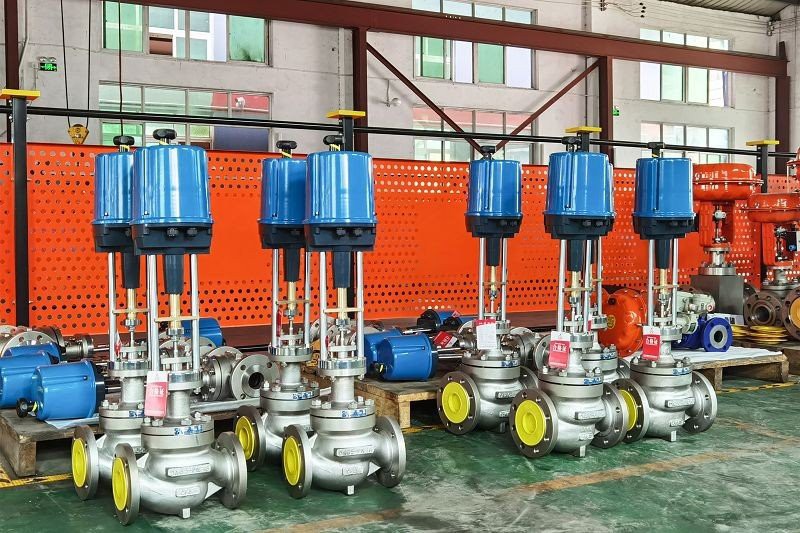
By obtaining external certification, we can provide our customers with the assurance that our products have been independently tested and meet the required EMC criteria.
Installation and Operating Considerations
Proper Grounding
Proper grounding is essential for ensuring the EMC of electric control valves. During installation, we recommend that our customers connect the valve's grounding terminal to a reliable earth ground. This helps to provide a low - impedance path for the dissipation of electrostatic charges and to reduce the potential for electromagnetic interference.
Cable Management
Cable management is another important aspect. We advise our customers to route power cables and signal cables separately to minimize cross - talk. Signal cables should be kept away from high - voltage and high - current cables. In addition, the cables should be properly terminated and shielded to prevent the ingress and egress of electromagnetic noise.
Surrounding Environment
The operating environment of the electric control valve can also affect its EMC performance. We recommend that the valves be installed in an environment with low electromagnetic noise levels. If the valves are installed in a noisy industrial environment, additional shielding or filtering measures may be required.
Our Product Range and EMC
We offer a wide range of electric control valves, including the Electric Cryogenic Control Valve, Electric Three - way Regulating Valve - Diversion, and Minimum Flow Control Valve. All of our products are designed and tested to meet the highest EMC standards. Whether you need a valve for a cryogenic application, a three - way flow control, or minimum flow regulation, you can trust that our valves will operate reliably in an electromagnetic environment without causing or being affected by interference.
Contact Us for Procurement
If you are in the market for high - quality electric control valves with excellent electromagnetic compatibility, we invite you to contact us for procurement. Our team of experts is ready to provide you with detailed product information, technical support, and competitive pricing. We are committed to meeting your specific requirements and ensuring the success of your projects.
References
- Electromagnetic Compatibility Handbook, edited by Klaus L. Schmitt
- EN 61000 - 6 - 2:2016, Electromagnetic compatibility (EMC) - Part 6 - 2: Generic standards - Immunity for industrial environments
- FCC Part 15, Radio Frequency Devices, Federal Communications Commission, USA


