

Hey there! As a supplier of Pneumatic Regulating Valves, I often get asked about the flow coefficient of these valves. So, I thought I'd write this blog to break it down for you in a simple and easy - to - understand way.
Let's start with the basics. What exactly is the flow coefficient? Well, the flow coefficient, often denoted as Cv, is a measure that tells us how much fluid (it could be gas or liquid) can flow through a valve under specific conditions. In simple terms, it's like a rating that shows the valve's capacity to let stuff pass through.
For a Pneumatic Regulating Valve, the Cv value is super important. It helps us figure out if the valve is the right fit for a particular application. Say you're working on a project where you need to control the flow of a certain amount of air or gas. You can use the Cv value to select the appropriate valve that can handle that flow rate.
How is the flow coefficient calculated? The formula for calculating Cv is based on the pressure drop across the valve and the flow rate of the fluid. For liquids, the basic formula is (Cv = Q\sqrt{\frac{SG}{\Delta P}}), where Q is the flow rate in gallons per minute (GPM), SG is the specific gravity of the liquid, and (\Delta P) is the pressure drop across the valve in pounds per square inch (PSI). For gases, the calculation is a bit more complex as it involves factors like temperature, pressure, and the gas's molecular weight.
Now, why does the flow coefficient matter for Pneumatic Regulating Valves? First of all, it affects the valve's performance. A valve with a too - low Cv value for a given application won't be able to handle the required flow rate. This can lead to issues like reduced efficiency, inaccurate control, and even system failures. On the other hand, a valve with a much higher Cv value than needed can be wasteful and more expensive.
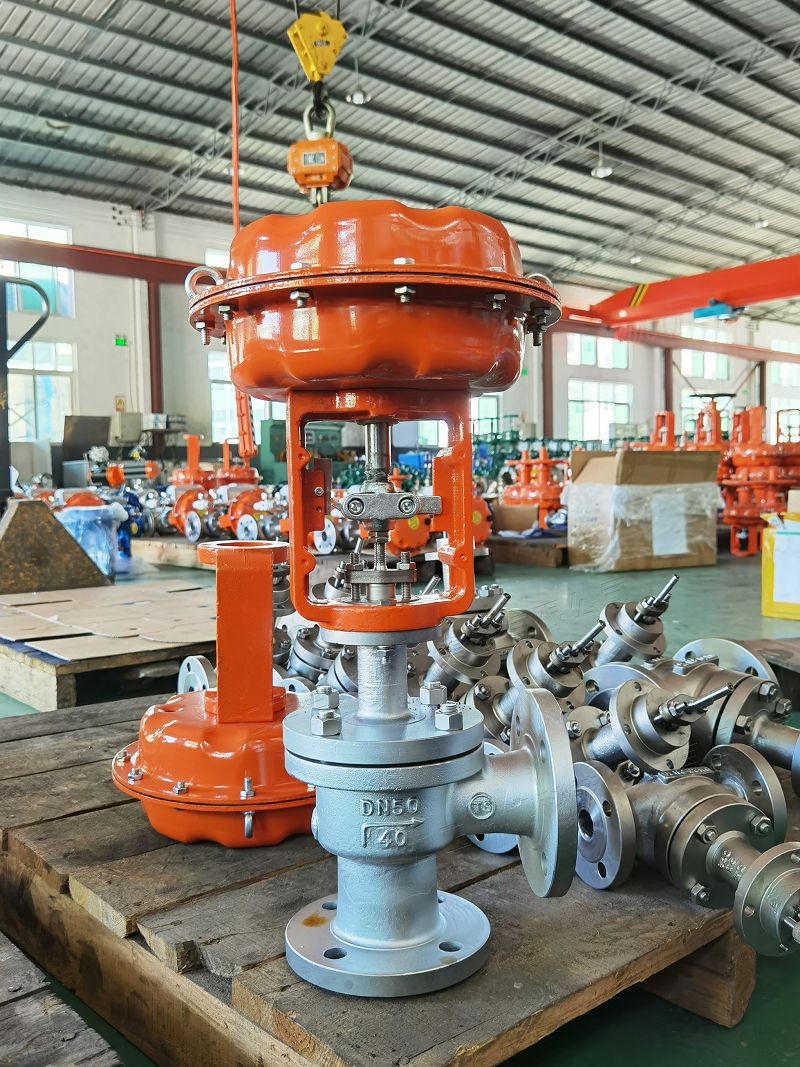
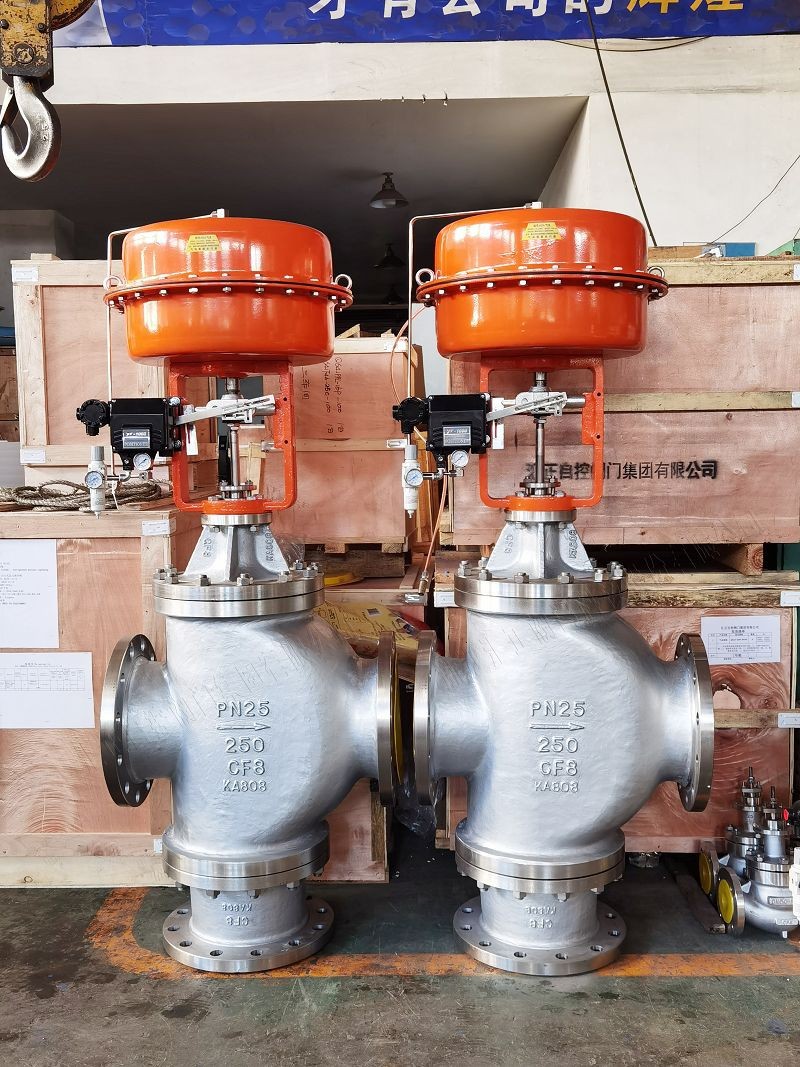
Let's take a look at some real - world scenarios. In an industrial setting, say a factory is using compressed air to power its pneumatic tools. The Pneumatic Regulating Valve needs to be sized correctly based on the Cv value to ensure that the right amount of air is delivered to each tool. If the valve has a Cv that's too low, the tools might not work properly, resulting in decreased productivity.
At our company, we offer a wide range of Pneumatic Regulating Valves with different Cv values to meet various needs. For example, our Pneumatic Steam Trap Control Valve is designed to handle specific flow rates based on its Cv rating. This valve is great for applications where you need to control the flow of steam in a system.
Another option is our Pneumatic Diaphragm Angle Single - seat Control Valve. This valve has a unique design that allows for precise control of the flow, and its Cv value can be selected according to the requirements of your project. Whether you're dealing with a small - scale operation or a large industrial plant, we can help you find the right valve with the appropriate Cv.
Our Pneumatic Diaphragm 3 - Way Diverting Control Valve is also a popular choice. It's useful for applications where you need to divert the flow of fluid in different directions. The Cv value of this valve is carefully calibrated to ensure efficient operation.
When you're selecting a Pneumatic Regulating Valve, it's not just about the Cv value. You also need to consider other factors like the valve's material, the type of actuator, and the operating temperature and pressure. But the Cv value is definitely a key factor in the decision - making process.
If you're still not sure which valve is right for your application, our team of experts is here to help. We can analyze your specific requirements, calculate the necessary Cv value, and recommend the best valve for your project. We understand that every customer's needs are unique, and we're committed to providing the best solutions.
So, if you're in the market for a Pneumatic Regulating Valve, don't hesitate to reach out to us. We can have a detailed discussion about your project, and together, we can find the perfect valve with the right flow coefficient to ensure optimal performance. Whether it's for a small DIY project or a large - scale industrial installation, we've got you covered.
In conclusion, the flow coefficient of a Pneumatic Regulating Valve is a crucial parameter that determines the valve's ability to handle fluid flow. By understanding the Cv value and its importance, you can make an informed decision when selecting a valve for your application. And remember, our company is here to support you every step of the way.
References
- "Control Valve Handbook" by Milton Beychok
- Various industry standards and guidelines related to pneumatic valves.


