

Valve hysteresis is a critical concept in the operation of cryogenic pneumatic control valves, which are widely used in various industries such as liquefied natural gas (LNG) production, aerospace, and scientific research. As a supplier of cryogenic pneumatic control valves, understanding the importance of valve hysteresis is essential for providing high - quality products and ensuring the efficient and reliable operation of our customers' systems.
What is Valve Hysteresis?
Valve hysteresis refers to the difference in the valve's response characteristics between the opening and closing processes. When a control signal is applied to a cryogenic pneumatic control valve, the valve does not open or close instantaneously. Instead, there is a certain lag and a difference in the relationship between the input signal and the valve position during the opening and closing strokes.
For example, when the control signal increases to open the valve, the valve may start to open at a certain signal value. However, when the control signal decreases to close the valve, the valve may not start to close until the signal reaches a lower value than the opening signal. This difference in the opening and closing thresholds is what we call valve hysteresis.
Importance of Valve Hysteresis in Cryogenic Pneumatic Control Valves
1. System Stability
In cryogenic applications, stability is of utmost importance. Cryogenic processes often involve precise temperature and pressure control. Valve hysteresis can affect the stability of the control system. A valve with excessive hysteresis may cause the system to oscillate. For instance, if the control system is trying to maintain a constant pressure in a cryogenic storage tank, a valve with large hysteresis may over - open or over - close, leading to pressure fluctuations. These fluctuations can not only affect the performance of the cryogenic system but also pose safety risks.
2. Control Accuracy
Accurate control of flow rate, pressure, and temperature is crucial in cryogenic applications. Valve hysteresis can reduce the control accuracy of the cryogenic pneumatic control valve. When the control system sends a signal to adjust the valve position, the actual valve position may deviate from the desired position due to hysteresis. This deviation can lead to errors in the process control, resulting in sub - optimal performance of the cryogenic system. For example, in an LNG liquefaction plant, inaccurate control of the flow rate through the cryogenic control valve can affect the liquefaction efficiency and product quality.
3. Energy Efficiency
Energy efficiency is a major concern in cryogenic operations. A valve with high hysteresis may require more energy to operate. When the valve is constantly over - opening or over - closing due to hysteresis, the control system needs to work harder to correct the valve position. This additional energy consumption not only increases the operating cost but also reduces the overall efficiency of the cryogenic system. By minimizing valve hysteresis, we can improve the energy efficiency of the system and reduce the environmental impact.
4. Equipment Longevity
Excessive valve hysteresis can also have a negative impact on the longevity of the cryogenic pneumatic control valve. The repeated over - opening and over - closing actions caused by hysteresis can put additional stress on the valve components, such as the diaphragm, stem, and seat. This can lead to premature wear and tear of the valve, increasing the maintenance cost and downtime of the system. By reducing valve hysteresis, we can extend the service life of the valve and ensure the long - term reliability of the cryogenic system.
Factors Affecting Valve Hysteresis in Cryogenic Pneumatic Control Valves
1. Material Properties
The materials used in the construction of the cryogenic pneumatic control valve can significantly affect valve hysteresis. At cryogenic temperatures, the mechanical properties of materials change. For example, the elasticity and stiffness of the diaphragm and other components may be different at low temperatures compared to room temperature. These changes can influence the valve's response characteristics and increase hysteresis. Therefore, it is crucial to select materials that are suitable for cryogenic applications and have stable mechanical properties at low temperatures.
2. Design and Manufacturing Quality
The design and manufacturing quality of the valve also play an important role in determining valve hysteresis. A well - designed valve with proper clearances, smooth surfaces, and accurate machining can minimize hysteresis. For example, a valve with a well - designed diaphragm and stem assembly can ensure a more consistent and precise response to the control signal. On the other hand, poor design or manufacturing defects can lead to increased hysteresis and reduced valve performance.
3. Operating Conditions
The operating conditions of the cryogenic pneumatic control valve, such as pressure, temperature, and flow rate, can affect valve hysteresis. High pressure and low temperature can cause changes in the physical properties of the valve components, leading to increased hysteresis. Additionally, the flow rate through the valve can also influence the valve's response characteristics. For example, a high - flow - rate application may require a valve with a lower hysteresis to ensure accurate control.

Our Solutions as a Cryogenic Pneumatic Control Valve Supplier
As a supplier of cryogenic pneumatic control valves, we are committed to providing valves with low hysteresis to meet the high - performance requirements of our customers.
1. Material Selection
We carefully select materials that are suitable for cryogenic applications. Our valves are made of high - quality materials with excellent mechanical properties at low temperatures. For example, we use special alloys for the valve body and components to ensure stability and durability in cryogenic environments.
2. Advanced Design and Manufacturing
Our valves are designed using advanced engineering techniques to minimize valve hysteresis. We pay attention to every detail in the design, from the shape of the diaphragm to the clearance between the stem and the seat. Our manufacturing process is highly precise, ensuring that each valve meets the strict quality standards.
3. Testing and Quality Control
We conduct comprehensive testing on our cryogenic pneumatic control valves to ensure low hysteresis. Our testing facilities are equipped with state - of - the - art instruments to measure the valve's response characteristics accurately. We also perform quality control checks at every stage of the manufacturing process to ensure that the valves meet the specified performance requirements.
Product Recommendations
We offer a wide range of cryogenic pneumatic control valves to meet different customer needs. Some of our popular products include:
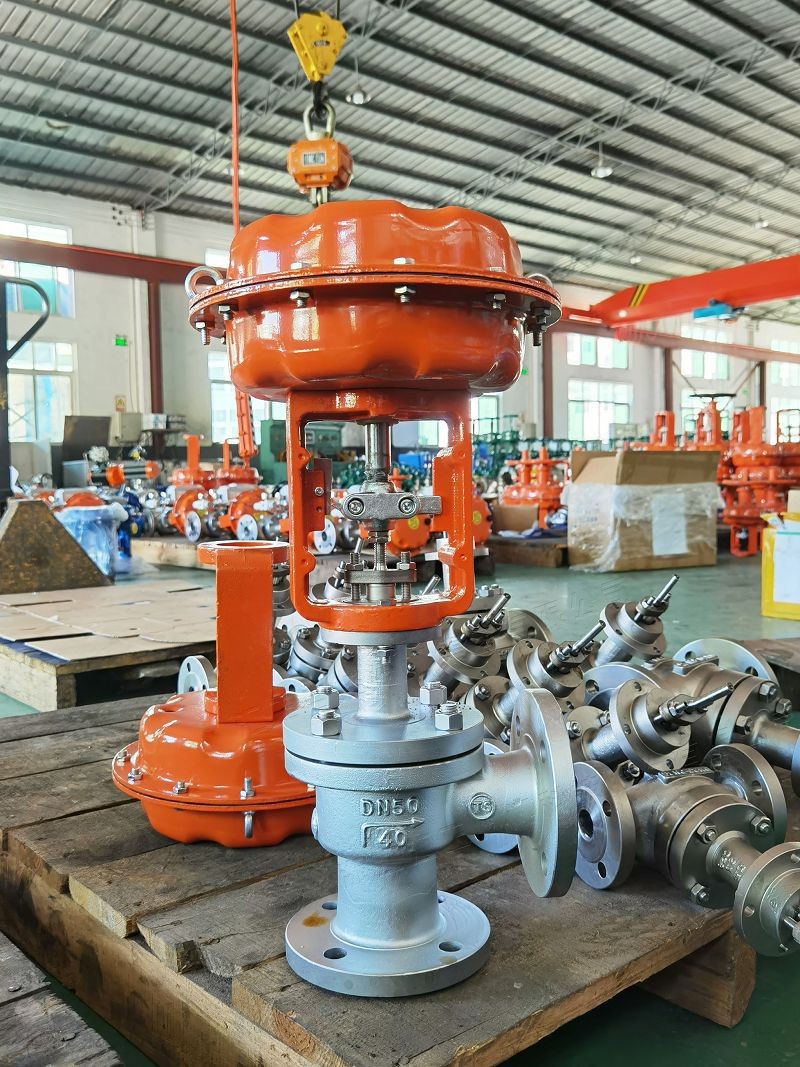
- Pneumatic Diaphragm Angle Single - seat Control Valve: This valve is suitable for applications where precise control of flow rate and pressure is required. It has a compact design and low hysteresis, making it ideal for cryogenic systems.
- Pneumatic Diaphragm Double - seat Regulating Valve: This valve is designed for applications with high flow rates and large pressure differentials. It provides excellent control performance and low hysteresis, ensuring stable operation in cryogenic environments.
- Pneumatic Diaphragm Valve: This valve is a versatile option for cryogenic applications. It has a simple structure and low hysteresis, making it easy to install and maintain.
Contact Us for Purchasing and Negotiation
If you are interested in our cryogenic pneumatic control valves or have any questions about valve hysteresis, please feel free to contact us. We have a team of experienced professionals who can provide you with detailed information and technical support. We are committed to working with you to find the best solutions for your cryogenic applications.
References
- Smith, J. (2018). Cryogenic Valve Technology. Elsevier.
- Johnson, R. (2020). Pneumatic Control Valve Design and Operation. Wiley.
- Brown, A. (2019). Handbook of Cryogenic Engineering. CRC Press.


